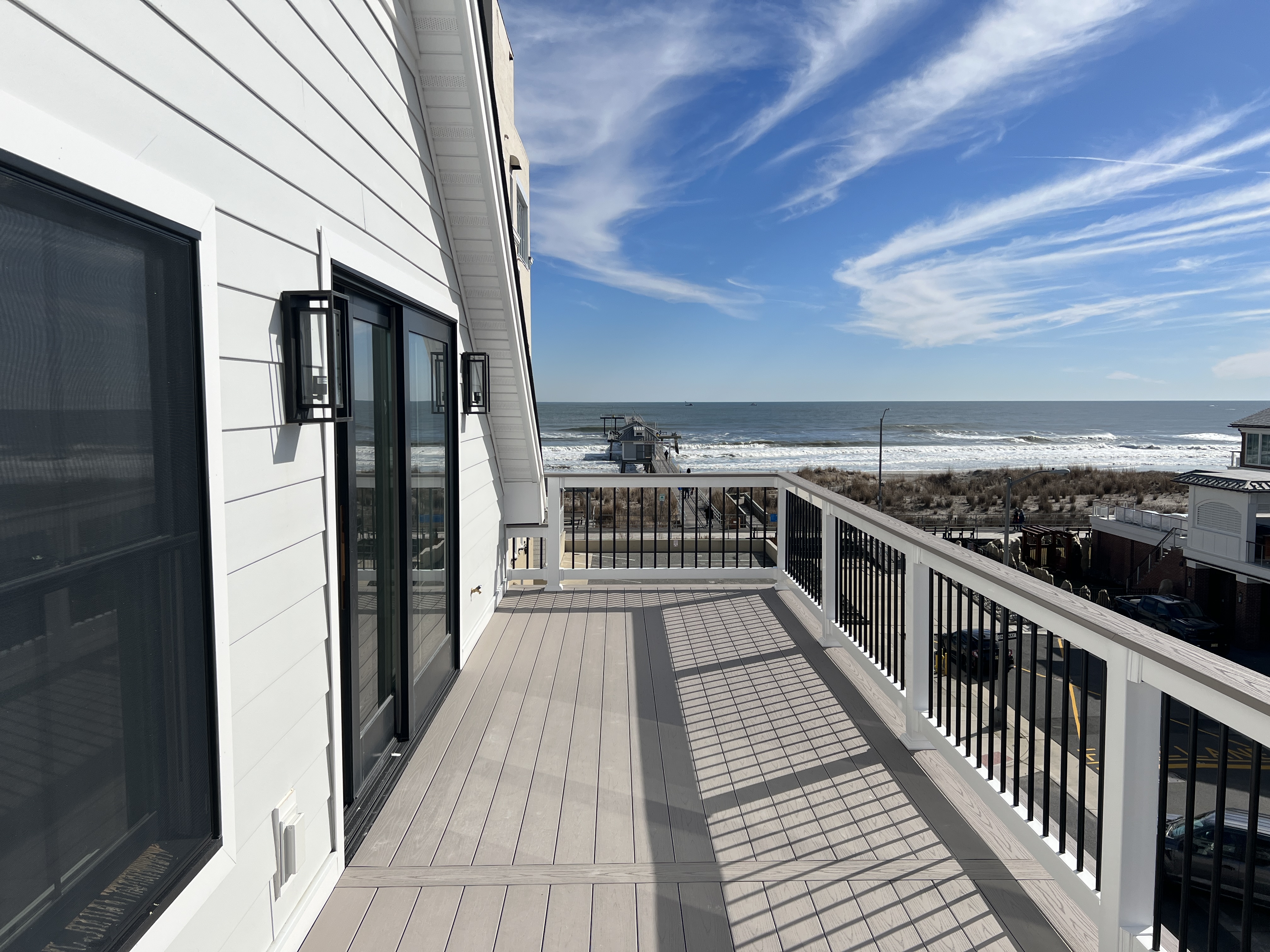
It's the question we get on almost every deck estimate: composite or cedar? Both are excellent choices for shore homes. Both have real advantages and real drawbacks. And the right answer depends on how you use your property, how often you're there, and how much you want to spend — upfront and over time.
Here's our honest, contractor's-eye-view comparison after building hundreds of decks across Stone Harbor, Wildwood, Avalon, Cape May, and the entire Jersey Shore.
Side-by-Side Comparison
| Category | Composite (Trex/Azek) | Cedar |
|---|---|---|
| Upfront Cost | Higher — typically 30-50% more than cedar | Lower upfront investment |
| Maintenance | Nearly zero — occasional cleaning | Seal or stain every 1-2 years |
| Lifespan | 25-30+ years with warranty | 15-20 years with proper maintenance |
| Appearance | Consistent, modern — many colors | Natural wood beauty, grays over time |
| Feel Underfoot | Slightly synthetic feel | Warm, natural wood feel |
| Heat in Sun | Can get hot in direct summer sun | Stays cooler than composite |
| Salt Air Performance | Excellent — engineered for moisture | Good — naturally rot resistant |
| Splinters | None | Possible as wood ages |
| 20-Year Total Cost | Lower — no maintenance costs | Higher once maintenance is factored in |
The Case for Composite
For second-home owners who visit on weekends and close for the winter, composite is almost always the better choice. Here's why: you're not there to maintain it. A cedar deck that isn't sealed regularly will crack, check, and deteriorate faster than one on a primary residence where the owner notices and addresses issues promptly.
Composite — specifically high-end brands like Trex Transcend or Azek — comes with 25-year fade and stain warranties and requires nothing more than an occasional wash with a garden hose. It looks the same in year 20 as it did in year one.
The other factor is resale. Composite decks are increasingly what buyers expect and what appraisers credit when valuing shore properties. A well-maintained cedar deck is still an asset, but composite removes the question entirely.
The Case for Cedar
Cedar has real advantages that composite can't replicate. The natural wood feel underfoot — especially for bare feet coming off the beach — is warmer and more pleasant than composite. Cedar stays significantly cooler in direct summer sun, which matters when your deck is south-facing and gets full afternoon exposure.
Cedar also has an aesthetic authenticity that some homeowners simply prefer. There's a reason cedar has been the material of choice for shore homes for generations. When properly maintained, a cedar deck is beautiful and completely appropriate for a coastal property.
If you're on a tighter budget and you're committed to maintaining the deck, cedar is an excellent choice. The math works out — you just have to actually do the maintenance.
Our Honest Verdict
For second-home owners on the Jersey Shore who close for the winter and want minimal maintenance: go composite. For primary or heavily used shore homes where natural wood feel and aesthetics matter and you're committed to maintenance: cedar is a beautiful choice. Either way, have stainless steel fasteners specified — they're non-negotiable in a salt air environment.
Ready for a Deck Estimate?
We'll walk your property, take measurements, and give you a firm quote on either material. No pressure, no obligation.
Get a Free EstimateWhat About IPE?
IPE hardwood is a third option worth mentioning — a premium natural wood that outperforms cedar significantly in durability and coastal performance. If you want natural wood but want something that will outlast cedar with less maintenance, IPE is worth the premium. We've written more about IPE in our full decking materials guide.
Ready to talk about your deck project? Contact us for a free estimate — we serve all of coastal South Jersey.