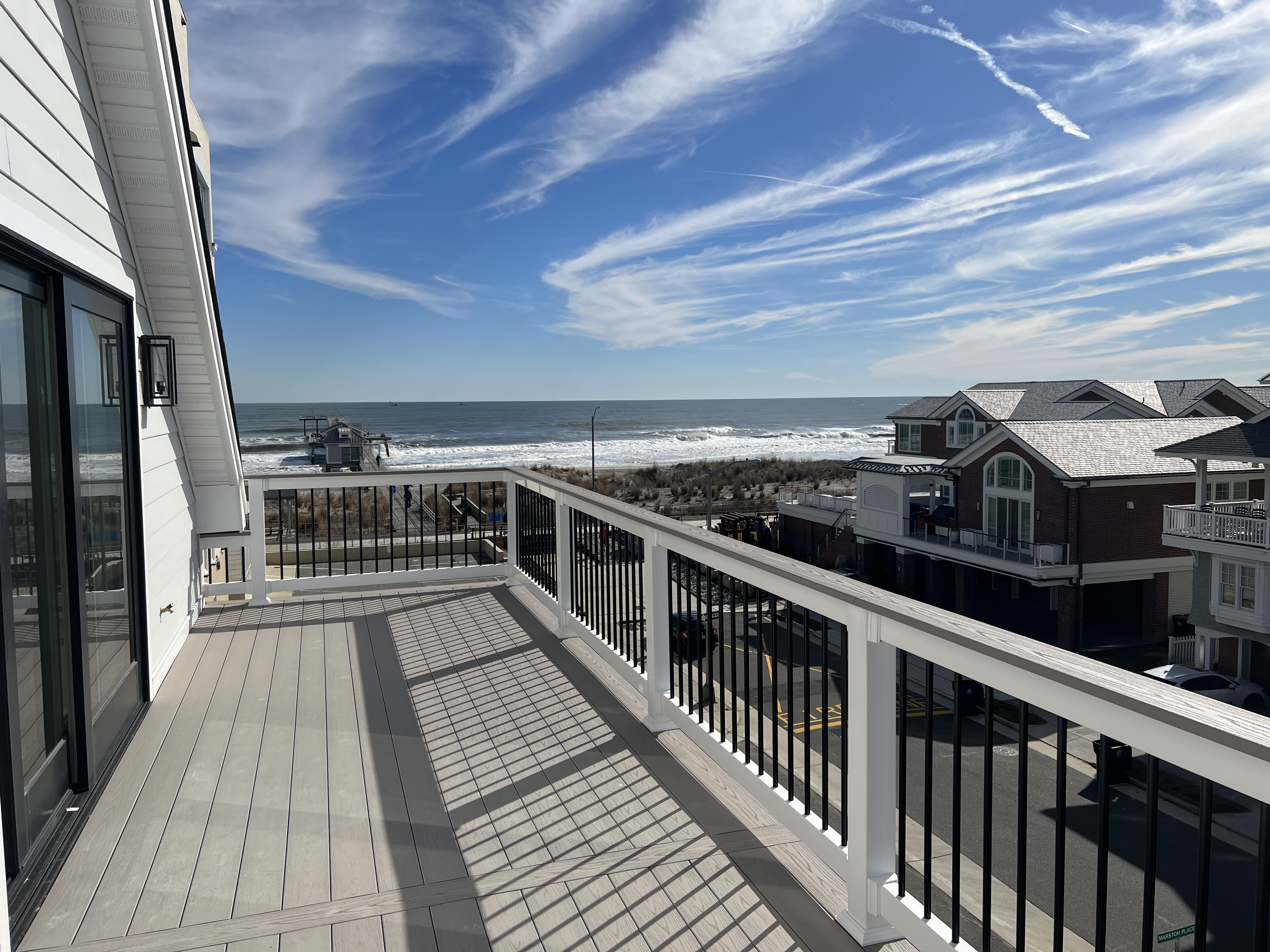
If you own a shore home on the Jersey Shore, you already know that the coastal environment is beautiful — and brutal on building materials. Salt air, UV exposure, high humidity, and heavy foot traffic from sand-covered beachgoers create conditions that chew through standard decking in just a few years.
After more than a decade building and replacing decks across Stone Harbor, Wildwood, Avalon, Cape May, and Ocean City, we've seen what holds up and what doesn't. Here's an honest breakdown of your best options.
Why Coastal Conditions Are Different
Most decking products are tested and rated for typical suburban conditions. A shore home is a different environment entirely. Salt air accelerates oxidation in metal fasteners, causes premature fading in some composites, and attacks the protective coatings on pressure-treated wood. Combined with summer heat that can push deck surface temperatures above 130°F and the constant wet-dry cycling from rain, spray, and humidity, you need materials engineered to handle the extremes.
The Best Options for Coastal NJ Decks
1. Trex and Azek Composite Decking
Composite decking has become the dominant choice for shore homes for good reason. High-quality brands like Trex and Azek are engineered specifically to resist moisture, fading, staining, and mold — the four biggest threats in a coastal environment.
- Pros: Virtually zero maintenance, fade and stain warranty, no splinters, doesn't need sealing or staining
- Cons: Higher upfront cost, surface can get hot in direct sun, feels different underfoot than wood
- Best for: Homeowners who want a set-it-and-forget-it deck that looks great for 25+ years
Trex Transcend and Azek Harvest Collection are our most frequently installed products on second homes where the owners want minimal maintenance during the off-season.
2. IPE Hardwood
IPE (pronounced ee-pay) is a Brazilian hardwood so dense it naturally resists rot, insects, and moisture without chemical treatment. It's the material of choice for boardwalks and marine applications — and it translates beautifully to residential decking.
- Pros: Stunning appearance, extreme durability, doesn't get as hot as composite in direct sun
- Cons: Expensive, requires annual oiling to maintain color, very heavy (affects structural requirements)
- Best for: Homeowners who want a premium natural wood look and are willing to do annual maintenance
3. Cedar
Cedar is naturally resistant to rot and insects, and it's significantly more affordable than IPE or premium composite. It's a good mid-range option for shore homes, but requires more maintenance in a coastal environment than it would inland.
- Pros: Natural beauty, relatively affordable, good rot resistance, easy to work with
- Cons: Needs sealing every 1-2 years, will gray without treatment, softer than IPE
- Best for: Homeowners who appreciate natural wood and are comfortable with periodic maintenance
4. Pressure-Treated Pine
Pressure-treated lumber is the most affordable decking option, but it's our least recommended for shore homes. The chemical treatment that protects it from rot also reacts with salt air, and it requires frequent sealing to prevent cracking and checking. We use it extensively for structural framing, but rarely for decking surfaces in coastal applications.
Ready to Replace or Build Your Deck?
We've built hundreds of coastal decks across Cape May, Atlantic, and Ocean Counties. Get a free on-site estimate — we come to your property.
Get a Free EstimateFasteners and Hardware Matter Too
One of the most overlooked aspects of coastal deck construction is hardware. Standard galvanized fasteners will rust in a salt air environment within a few years, causing unsightly stains and structural compromise. We spec stainless steel or hot-dipped galvanized fasteners on every coastal project — it adds to the cost but it's not optional in our environment.
Our Recommendation
For most Jersey Shore second-home owners, we recommend Trex Transcend or Azek composite decking with hidden stainless fasteners. The upfront cost is higher than wood, but the total cost of ownership over 20 years — factoring in zero staining, sealing, or board replacement — makes it the clear winner for a property you're visiting on weekends and closing for the winter.
If budget allows and you want a truly premium look, IPE is worth the investment. Either way, avoid pressure-treated pine for deck surfaces in a coastal environment. You'll be replacing boards within 5-7 years.
Have questions about your specific project? Contact us for a free estimate — we serve Stone Harbor, Avalon, Wildwood, Cape May, Sea Isle City, Ocean City, and all of coastal South Jersey.